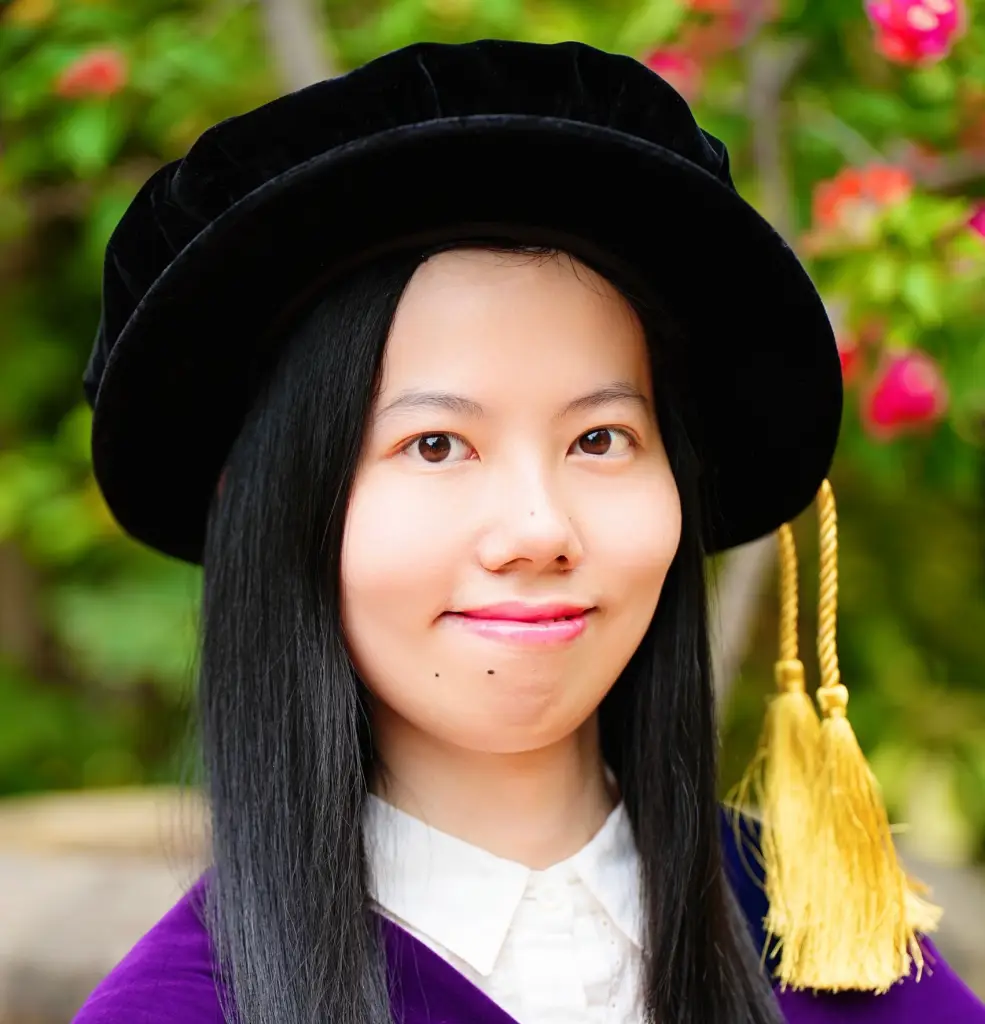
Student Sharing - WANG YUXUAN
As a “daring and enterprising rising star”, I chose to pursue the Master of Arts in Chinese Values-Based Leadership Education (MA(CVBLE)) because the programme integrates educational professionalism, management thinking, traditional Chinese values, and an international perspective, offering both theoretical depth and practical relevance. This interdisciplinary learning model has enabled me to understand educational leadership and values education from multiple perspectives, while inspiring me to think more openly and creatively about the future possibilities of education and cultural development.
One of the most memorable challenges during my studies came from a group assignment. Just twenty-four hours before the deadline, our team realised that the content of our assignment did not fully align with the requirements, and we had to make substantial revisions within a very limited time. Faced with this unexpected pressure, we quickly redistributed responsibilities, communicated efficiently, and worked closely together to address the issues. In the end, we completed the task successfully. This experience taught me that success does not come only from careful preparation, but also from adaptability and team spirit when facing change. It also reminded me of the importance of clarifying requirements carefully before carrying out a task, and helped me understand that adjusting direction at the right time is often more important than persisting blindly.
The work that best represents my learning achievement is the design and planning of the School-Based Tea Ceremony Leadership Programme Proposal. This project combines tea ceremony cultural experiences with theories of educational leadership, integrating traditional Chinese culture, values education, and leadership development into a concrete and feasible school-based programme. Through this practical project, I not only deepened my understanding of the spirit of Chinese culture, but also learned how to transform cultural heritage into educational action, allowing values education to become more tangible, experiential, and meaningful in students’ growth and learning journeys.
Guided by the belief to “do whatever you aspire to do”, I have always believed that curiosity and the willingness to take action are the most important driving forces for personal growth. Looking ahead, I will continue to explore the possibilities of education and cultural development with an open and innovative mindset. Through continuous experimentation and practice, I hope to expand the boundaries of personal growth and educational innovation.